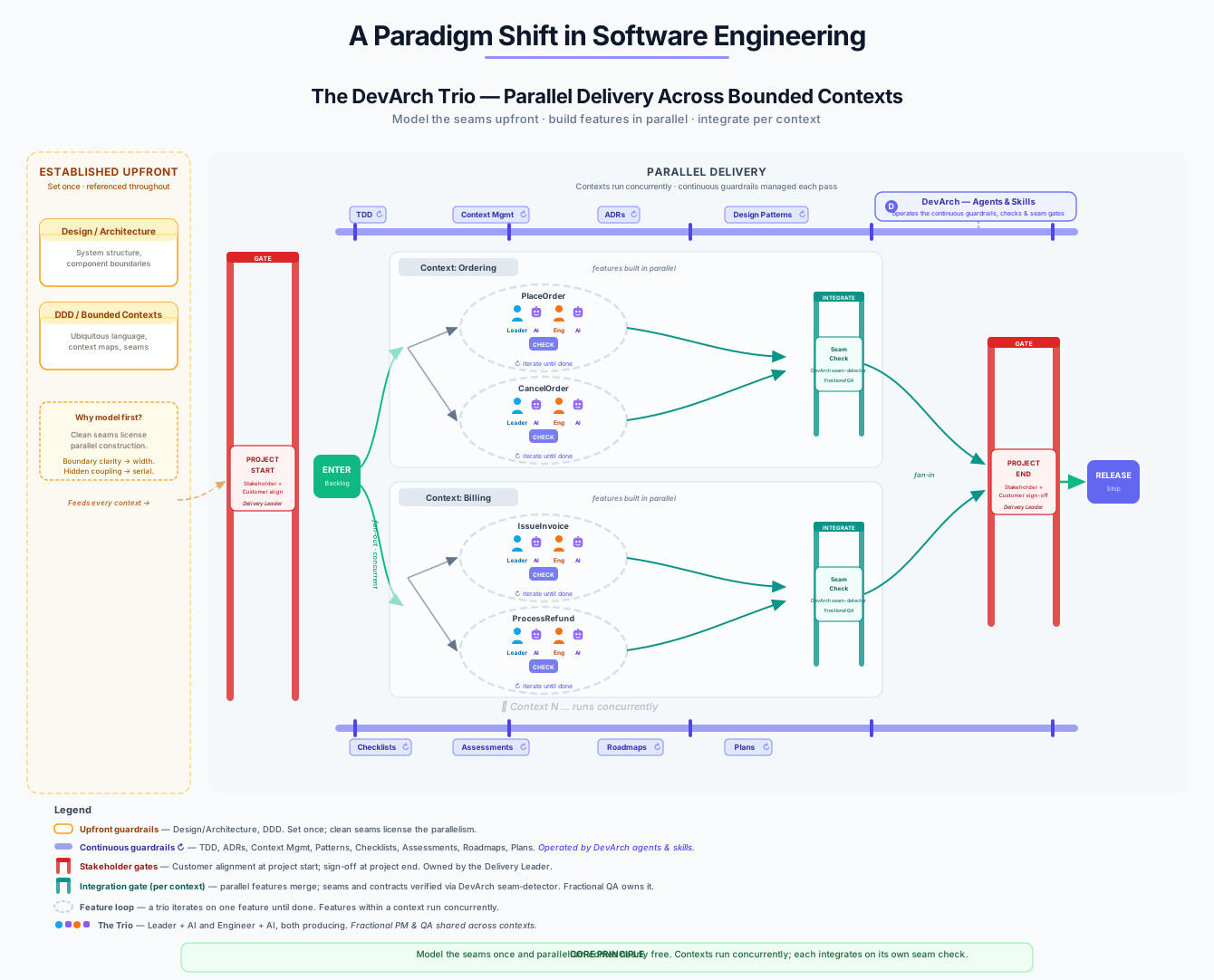
A paradigm shift in software engineering. Two people, each paired with AI, delivering inside a constraint system that DevArch maintains. The humans hold intent, judgment, and the quality bar; AI is the production engine; DevArch keeps the guardrails coherent across every session. The bottleneck moves from production to judgment — and the team gets smaller, not larger.
Pair programming evolved. The third partner is fundamentally different in nature from the first two.
Holds the intent and the quality bar. Establishes the constraints — architecture, domain boundaries, "what good looks like" — and watches for drift. Codes too.
Directs the AI effectively, spots when it goes off track, owns integration and the edge cases AI handles poorly. Both humans produce.
The production engine — fast, tireless, lacking judgment. Bounded by the constraint system so its output stays coherent.
Operates the constraint system: TDD, ADRs, context management, design patterns, seam checks, assessments. The guardrails that make the other three work.
Everything the original Team Topologies framework managed with handoffs between specialist teams, the trio manages with a maintained constraint system. The leader's craft becomes curating that system — keeping ADRs, tests, context, and boundaries current and coherent — while both humans deliver within it.
Bounded contexts established upfront have explicit seams — so features inside them can be constructed concurrently. Parallelism is proportional to boundary clarity: clean seams license wide fan-out; hidden coupling forces serialization. Each context integrates on its own seam check; stakeholder gates bracket the whole project. Fractional PM and QA are shared across contexts rather than embedded in any one trio.
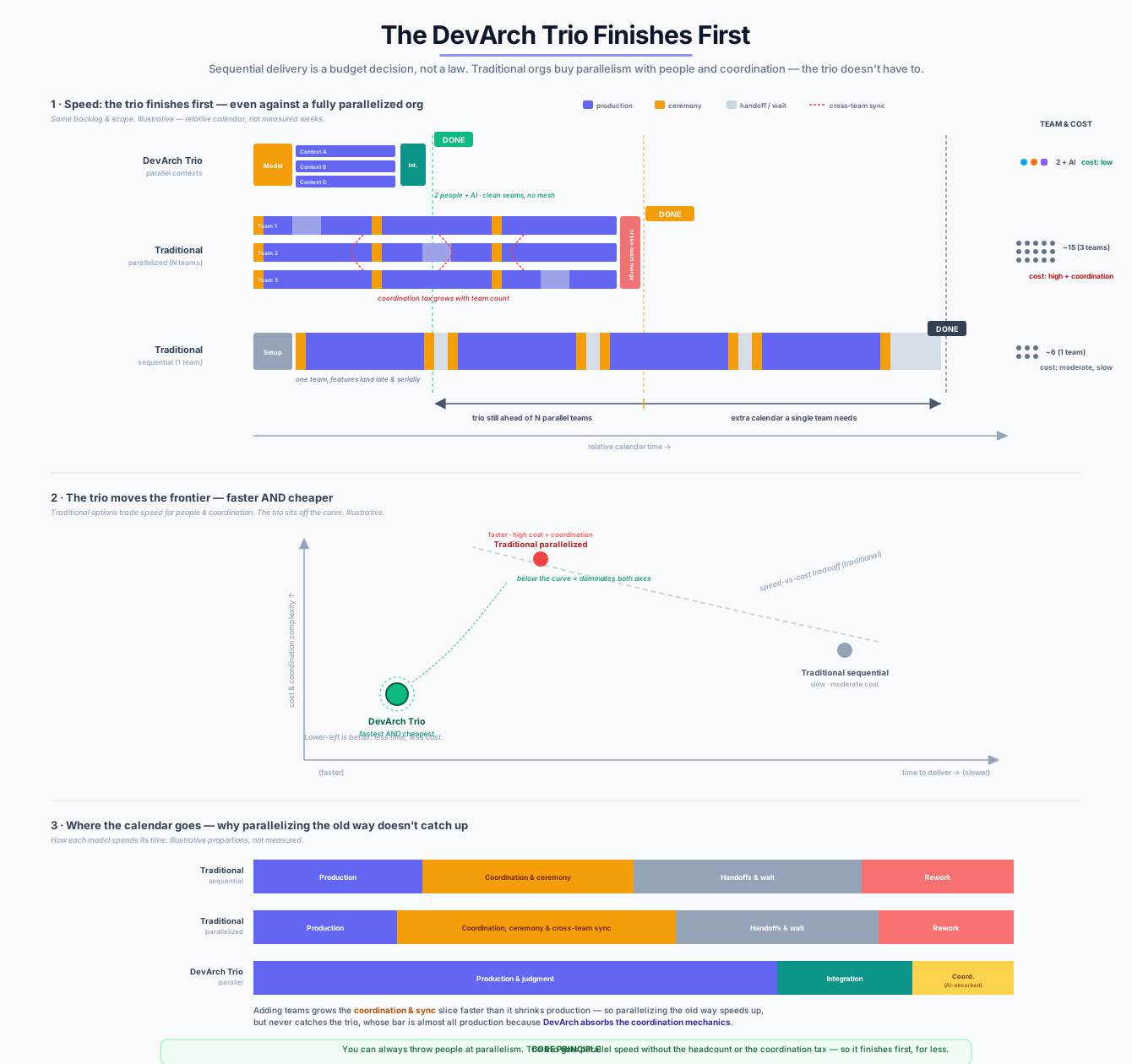
Sequential delivery is a budget decision, not a law. Traditional orgs can parallelize — by adding teams — but they pay for it in headcount and a coordination tax that grows faster than the work shrinks. The trio gets parallel speed without the people or the coordination overhead, because there are fewer humans and DevArch absorbs the coordination mechanics. So it finishes first — and for less.
The quality of the output becomes a function of how well the constraint system is designed and maintained. That system is what DevArch is.